
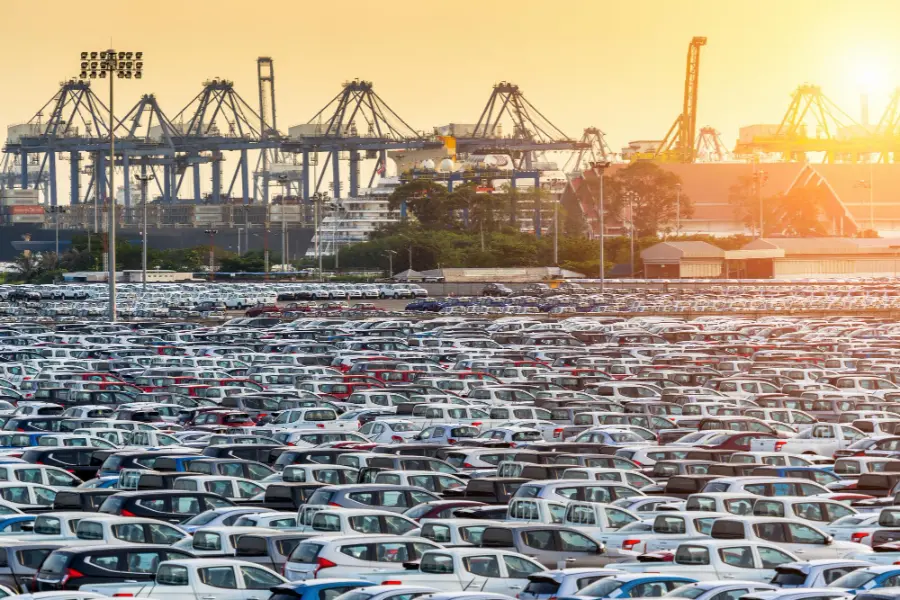
Yes, you can export a used car from Australia to Europe. But before you picture a tidy little earner shipping secondhand sedans off to the continent, there’s one detail most guides on this topic skip straight past: Australia drives on the right-hand side of the car, and most of Europe doesn’t.
That single fact decides almost everything else in this article. It determines whether your car is even a realistic export candidate, which countries will actually register it, and whether parts, not the whole vehicle, might be the smarter way to tap into the European market.
Below, we’ll cover where whole-car export to Europe genuinely works, why exporting parts is often the better opportunity, the real paperwork and shipping process, honest costs and timeframes, and the easiest path if you’d rather not handle any of it yourself. If you already know you’d prefer to skip the legwork, our global vehicle and parts export service takes care of this from start to finish.
Can You Actually Export a Used Vehicle from Australia to Europe?
The short answer is yes, with some real limits.
There’s no export duty charged when goods leave Australia, and exports are generally free of GST, so the Australian end of exporting a used vehicle is fairly simple on paper. You lodge an export declaration, organise shipping, and the car leaves the country. That part isn’t the hard bit.
The complication shows up the moment the car tries to land somewhere. Most of Europe drives left-hand drive (LHD). Australia, like the UK, drives right-hand drive (RHD). An RHD Australian car generally can’t be registered for everyday road use in an LHD country without significant engineering work, and that work usually costs more than the car is worth.
The Steering Wheel Problem Nobody Mentions
This is the detail that separates a genuinely useful guide from a generic one. Plenty of exporters will tell you they ship “worldwide” without ever mentioning that worldwide doesn’t mean it’s legal, or sensible, to drive the car once it arrives.
If you’re exporting a standard RHD passenger car, mainland Europe is mostly off the table for everyday use. Converting a vehicle from RHD to LHD, or getting it registered as-is, is specialist work, and for an ordinary used car, it rarely makes financial sense.
Where Exporting a Used Car to Europe Actually Works
Four countries in Europe still drive on the right-hand side, the same as Australia. These are your realistic markets for exporting a complete RHD vehicle.
| Drives Right-Hand (RHD) | Drives Left-Hand (LHD) |
|---|---|
| United Kingdom | Germany |
| Ireland | France |
| Malta | Netherlands |
| Cyprus | Spain, Italy, and most of mainland Europe |
Outside those four countries, whole-car export to Europe is largely limited to genuine exceptions: classic or collector vehicles, often 25 to 30-plus years old, under heritage import provisions, or vehicles entering under a specific country concession. These rules differ by country and change over time, so always confirm directly with the destination country’s customs authority before committing to anything.
Exporting Used Auto Parts to Europe Is Often the Smarter Move
If your car isn’t a strong candidate for whole-vehicle export, Europe isn’t necessarily off the table. Parts are a different story entirely.
A used engine, gearbox, or door panel isn’t a registered road vehicle. It doesn’t matter which side of the road a country drives on. That single fact opens up the entire European market, not just the four RHD countries, for secondhand parts in a way it never will for complete cars.
Parts That Travel Well
- Engines and transmissions
- Body panels, bonnets, and lighting
- Suspension and steering components
- Interior trim and electrical parts
- RHD-specific components, such as steering racks, dashboards, and indicator stalks, for buyers in the UK, Ireland, Malta, and Cyprus
This is one area where being a genuine one-stop shop works in a seller’s favour. MMM Auto Centre covers car removal, wrecking, parts sales, and export under one roof, so a part that doesn’t move locally doesn’t just sit on a shelf. It goes straight into the same export pipeline we use for vehicles. Browse current stock through our auto parts shop, or get in touch with your specific requirements.
Step-by-Step: How to Export a Used Car from Australia
If you do have a vehicle that’s a realistic export candidate, most likely bound for the UK, Ireland, Malta, or Cyprus, here’s how the process actually runs.
- Confirm the car is legally exportable. No finance owing, no caveats, and a clear title in your name.
- Confirm the destination country will accept it. Check current RHD/LHD and registration rules with that country’s customs authority before you spend a dollar on shipping.
- Lodge an Export Declaration with the Australian Border Force. Most goods leaving Australia with a value above a certain threshold, including vehicles, need to be reported this way.
- Clean the vehicle thoroughly, inside, outside, and underneath. Plenty of destination countries run their own biosecurity and customs checks, and a dirty vehicle is the easiest way to get held up at the other end.
- Choose a shipping method.
RoRo vs Container Shipping
| Roll-on/Roll-off (RoRo) | Sole-Use Container | |
|---|---|---|
| Cost | Lower | Higher |
| Personal items allowed | No | Yes |
| Handling | Driven on and off by various people in transit | Sealed and minimally handled |
| Best for | Standard daily-drivers | Classic, rare, or high-value vehicles |
- Arrange marine insurance, typically around 1.5 to 2 per cent of the vehicle’s value.
- Brief the buyer on their side of the process. In the EU, this usually means the buyer needs an EORI number and will face import duties and VAT on arrival, separate from anything paid in Australia.
How Much Does It Cost and How Long Does It Take?
Shipping a vehicle from Australia to Europe typically costs between AU$2,500 and AU$5,500, depending on the route, vessel availability, and chosen method. Treat that as a planning range rather than a fixed quote, since fuel surcharges and exchange rates fluctuate.
Transit time depends heavily on the shipping method. Container shipping to Europe is commonly quoted at around six weeks, while RoRo services can take noticeably longer. Build in a buffer rather than promising a buyer a firm arrival date.
Worth repeating: exporting from Australia itself is duty-free and GST-free. The cost that catches people out is on the other end, where the destination country’s import duties and VAT can add a meaningful amount on top of everything you’ve already paid.
Common Mistakes That Delay or Derail an Export
- Assuming any used car can be registered anywhere in Europe
- Shipping before confirming the buyer can actually import and register the vehicle
- Skipping the Export Declaration
- Underestimating duties and VAT on the destination end
- Sending a vehicle that isn’t clean enough to clear biosecurity or customs checks
Each of these is avoidable with a bit of homework upfront. None of them is the kind of mistake you want to discover after the car has already left the country.
Checklist: Documents You Need to Export a Car from Australia
- Proof of ownership and a clear title
- Finance payout letter, if applicable
- Export Declaration lodged with the ABF
- Commercial invoice or bill of sale
- Bill of lading from the shipping line
- Marine insurance certificate
- Buyer’s EORI number, for EU-bound shipments
- Destination-country compliance or registration documents
Keep copies of everything. If a question comes up at either end, paperwork settles it faster than a phone call ever will.
Don’t Want to Deal With Any of This Yourself? Here’s the Easier Path
If reading through declarations, EORI numbers, and RoRo bookings has you wondering whether it’s worth the effort, you’re not alone. Most people selling a used car in Melbourne don’t need to manage any of this themselves.
MMM Auto Centre is a licensed dealer (LMCT 10510) with over 20 years in the trade, and we already have the export relationships and processes in place. That means you can sell your car or its parts and let someone else handle the paperwork end-to-end.
If you’d rather sell locally and skip exporting altogether, our cash-for-cars and free car removal services make it quick and straightforward, too. Either way, you get a fair outcome without having to become an export expert overnight.
Frequently Asked Questions
Can I export a used car from Australia to Europe? Yes, but realistically only to the handful of European countries that drive right-hand drive, namely the UK, Ireland, Malta, and Cyprus, unless your vehicle qualifies under a classic or specialist exemption.
Why can’t I just export my car to Germany or France? Germany, France, and most of mainland Europe drive left-hand drive. A standard RHD Australian car generally can’t be registered for everyday road use there without conversion work that costs more than most used cars are worth.
Which European countries can register a right-hand drive car? The United Kingdom, Ireland, Malta, and Cyprus all drive on the right-hand side, the same as Australia, and are the realistic markets for whole-vehicle export.
Do I need an export permit to sell a car from Australia overseas? You need to lodge an Export Declaration with the Australian Border Force for most vehicles leaving the country. There’s no export duty, but the declaration itself is a requirement, not optional paperwork.
How much does it cost to export a car from Australia to Europe? Shipping typically costs between AU$2,500 and AU$5,500, plus marine insurance and any customs broker fees. Destination-country duties and VAT are separate and paid by the buyer.
How long does shipping a car from Australia to Europe take? Container shipping commonly takes around six weeks. RoRo services can take longer, so it’s worth building in a buffer when setting expectations with a buyer.
Is exporting parts easier than exporting a whole car? In most cases, yes. Parts aren’t registered vehicles, so the RHD/LHD restriction that limits whole-car export to Europe simply doesn’t apply.
What happens if my car still has finance owing? You’ll generally need a payout letter and clearance from the finance company before the vehicle can be legally exported. Sort this out before arranging shipping, not after.
Final Thoughts
Exporting used cars from Australia to Europe is real, but it’s a narrower opportunity than it first sounds. The UK, Ireland, Malta, and Cyprus are genuine markets for whole vehicles. The rest of mainland Europe is a much better fit for parts than complete cars.
If you’ve got a vehicle or a stack of parts and you’re trying to work out the best way to turn them into money without wrestling with export paperwork yourself, give our team a call or get in touch through our contact page. We’ll talk you through what’s realistic for your specific car and handle the rest.
